2026-05-30
In daily life, most people believe that the higher the power of an LED light, the brighter it will be. While this is often true on the surface, a closer examination reveals otherwise. The brightness of a light fixture isn't determined by its power rating, but rather by its luminous flux.
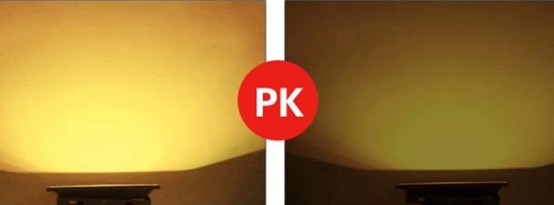
Light fixture brightness can be calculated, but another essential parameter must also be known: luminous efficacy, measured in lumens per watt (lm/W). Different light sources producing the same luminous flux consume less energy when their luminous efficacy is higher. Luminous flux equals luminous efficacy multiplied by power.
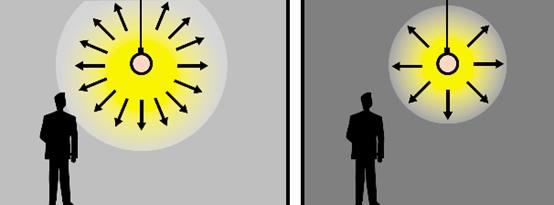
Now let's take a look at an example: Given the power of the lamp, calculate the luminous flux emitted by the lamp per unit time.For a 36W lamp with a luminous efficiency of 80lm/W, the luminous flux is 2880lm.A 30W lamp with a luminous efficacy of 110lm/W and a luminous flux of 3300lm.
From the above example, it is clearly observable that the luminous flux of a 30W lamp is larger than that of a 36W lamp. Therefore, the 30W lamp will be brighter than the 36W lamp, and the luminous flux determines their brightness.